
Who's really winning the Christmas advertising battle?
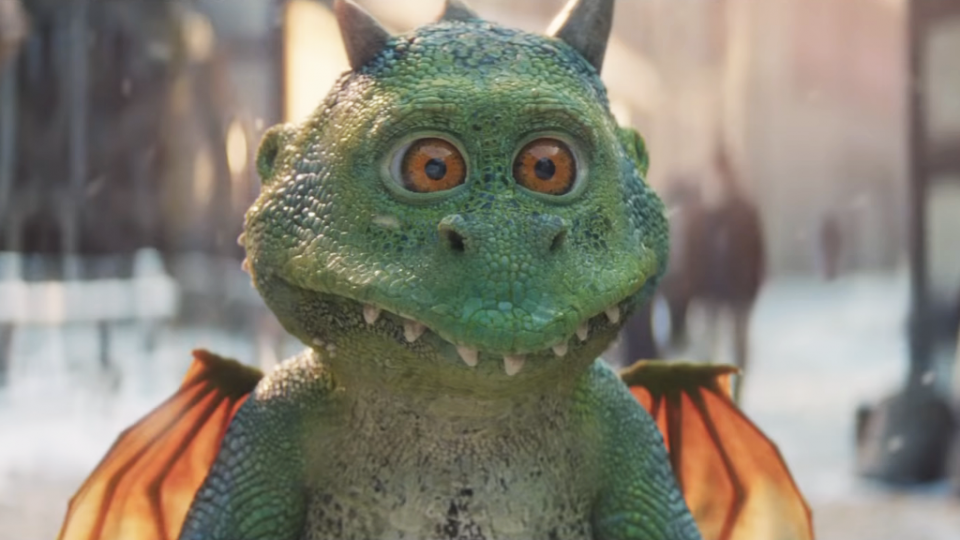

Every year, a range of research companies pop up with some spurious new research technique for deciding which retailer’s TV blockbuster has ‘won Christmas’. A more definitive way to settle the argument is to use Google Trends analysis.
I’ve looked at the volume of UK searches for each retailer’s “christmas advert” from bonfire night onwards, to compare the average level of interest in each creative extravaganza. We’ll come to John Lewis in a moment, but here are the top five performers excluding Edgar the Dragon:

Sainsbury’s tale of the exiled chimney sweep hits the highest peak, but Aldi enjoys the highest average level of interest across the period. In fact, Aldi seems to have pulled off a unique trick with some clever campaign planning, to extend interest in its campaign beyond a single spike.
It’s also a good performance from the crazed jumper-wearers of M&S, the time-travelling Tesco delivery man and Asda’s heart-string-tugging mish-mash of Northern Lights, sibling affection and a dead grandad.
So why exclude John Lewis from the initial analysis? Well, because John Lewis smashes everything else out of sight. It doesn’t just win the Christmas ad-battle, it destroys the competition to the point where they’re ground into the dust at the foot of the chart:

So in summary, it’s Edgar the dragon miles out in front, with Kevin the Carrot winning the race to be best of the rest. If you want to see how your brand performed, here’s the full list of results:
Average level of UK interest in retailer Christmas advertising.
Source: Google Trends. UK search volumes for “retailer-name Christmas advert” Nov 5-21. Indexed against the peak search volume achieved by Sainsbury’s (100).
John Lewis 374
Aldi 45
Sainsbury’s 22
M&S 13
Tesco 10
Asda 10
Argos 7
Lidl 5
Boots 4
Very 4